
INSTINCTIVE

A visual field guide to common changes in canine body language.

Explore 7 signals that may appear when a dog needs more space — with context, limitations and safety framing throughout.

Two examples, with important context

01

Turn away

The head, eyes or whole body shifts away from a person, dog or object. It can be an attempt to disengage or reduce social pressure.

IMPORTANT CONTEXT

During an interaction, a turn away may be relevant alongside social pressure, available space and the dog's opportunity to disengage.

02

Lip lick or yawn

A quick tongue flick or a yawn can appear with stress or uncertainty, but also with food, tiredness or normal grooming. Context matters.

IMPORTANT CONTEXT

What happened immediately beforehand, the rest of the body and the dog's usual baseline all affect how this movement can be understood.

2 / 7

The full guide contains five additional examples and broader safety context.

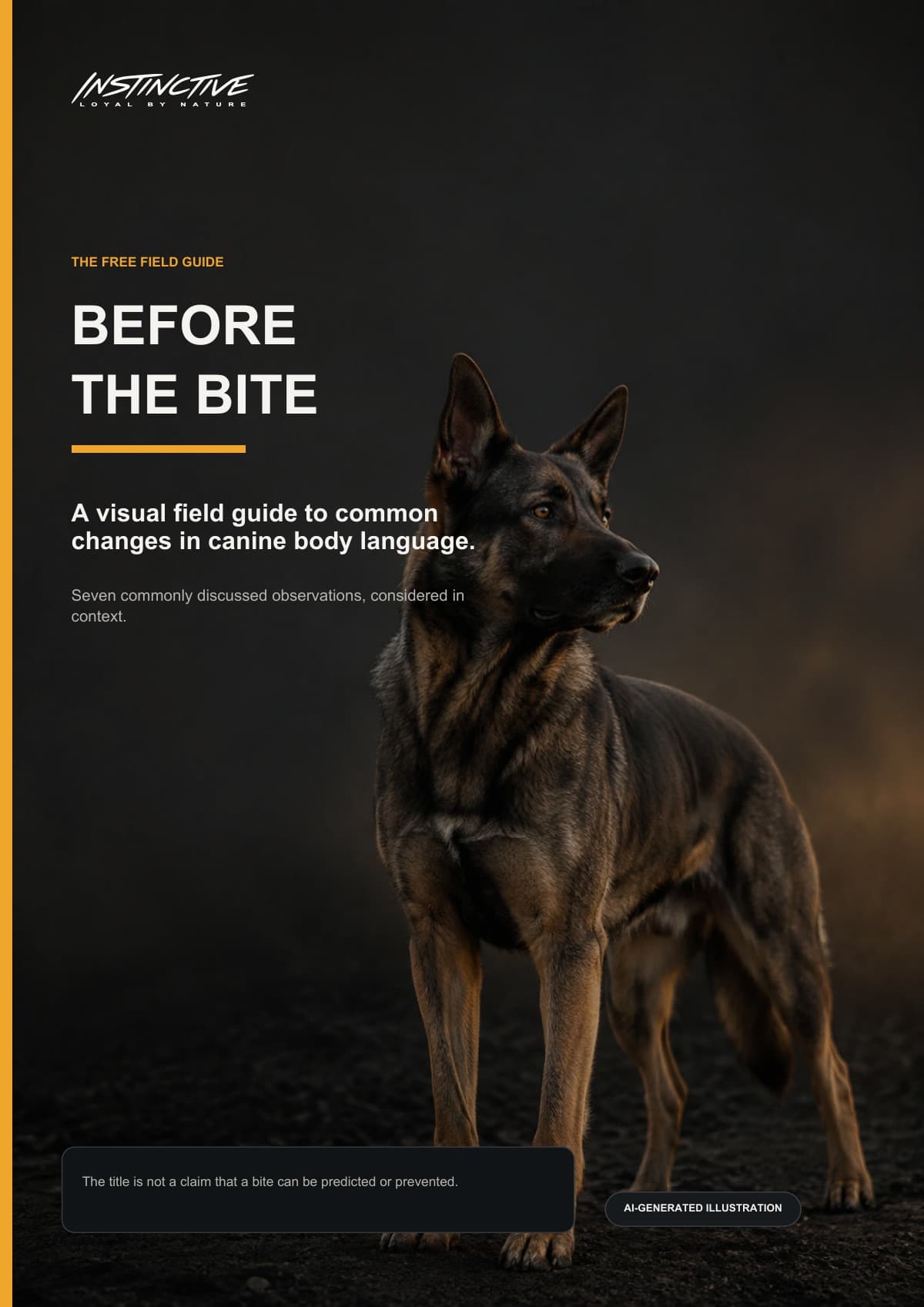
Cover of the canine body-language field guide "Before the Bite"
AI-GENERATED ILLUSTRATION
THE FREE FIELD GUIDE

Before the Bite

A visual field guide to common changes in canine body language. No single signal should be used to predict what a dog will do next. Context, history and the individual dog always matter.

ALSO INSIDE

  • Multiple signals and changes across the whole body
  • Context, history and the individual dog
  • Safety limits involving children, pain, illness and emergencies

Get the free guide

Details about this one-time processing are in the Privacy Policy.

Your guide is sent straight to your inbox — no waiting.

No spam. Used only to send this guide.